2 contributions
Older People on Social Media

Older People on Social Media — An Underestimated Shift in the Digital Public Sphere?

When people talk about social media today, they still often think of young people and trends. Yet the digital public sphere has long been shifting in the other direction.

Read impulse →
Unequal Visibility in Civil Society

Unequal Visibility in Civil Society?

Organisations between lacking resources and structural barriers — why communication becomes a precondition for political participation for many civil society actors.

Read impulse →

No contributions in this category.

← Back to overview

Older People on Social Media

An underestimated shift in the digital public sphere?

Older People on Social Media

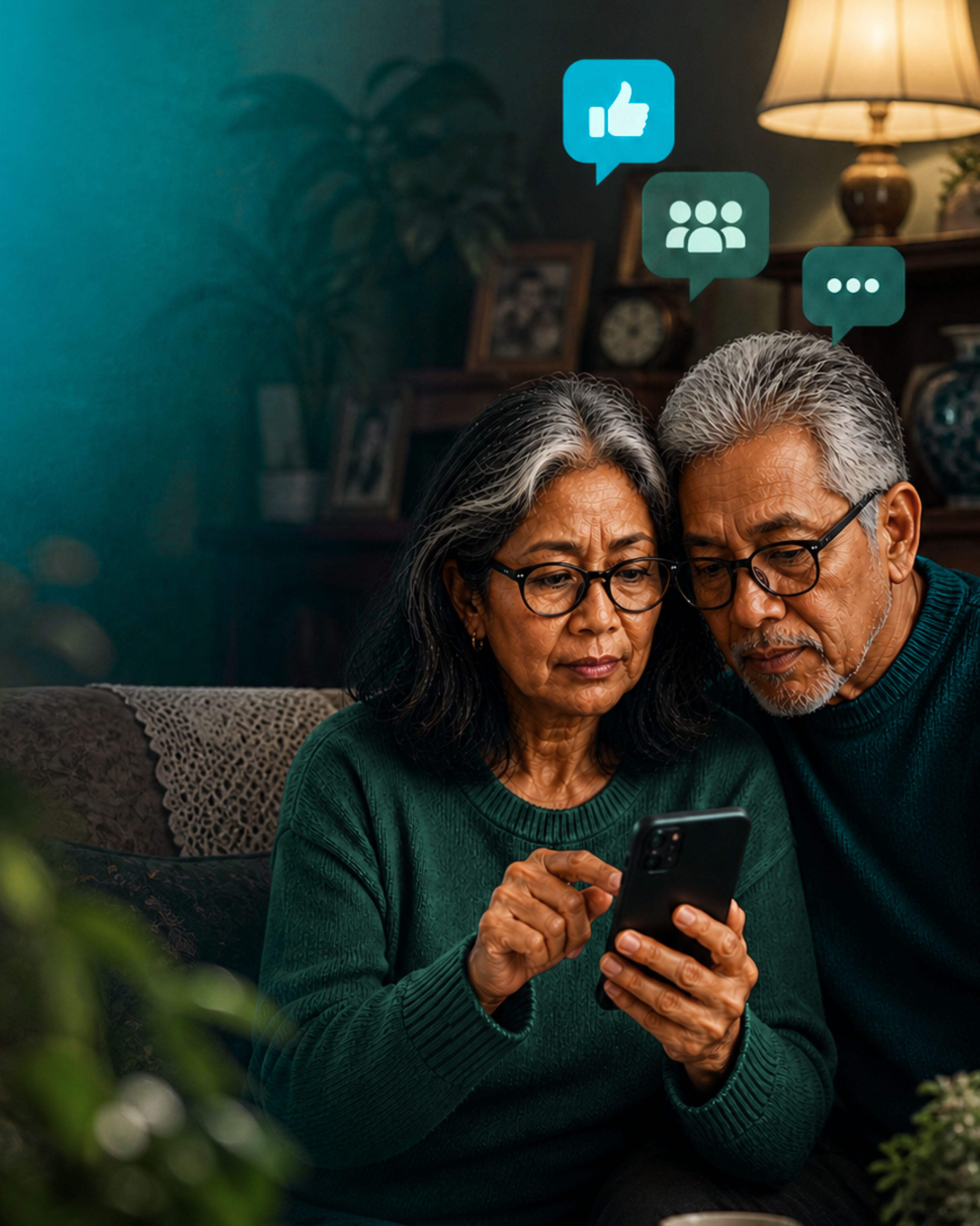
When people talk about social media today, they still often think of young people, trends and "TikTok politics". Yet the digital public sphere has long been shifting in the other direction: older people are now among the fastest-growing user groups.

According to the Federal Statistical Office, 59% of 16–74 year-olds in Germany actively used social media in 2025 (2021: 47%). Particularly notable is the growth among older age groups: among 55–64 year-olds, the share rose from 29% to 42%, and among 65–74 year-olds to 25%.

"Catching up visibly"

The ARD/ZDF Media Study 2025 describes this process as a kind of "life cycle" of platforms: younger people set trends while older users follow on established platforms. The key point is not only that older people are joining, but how this changes the political communication landscape: reach, visibility and debate logics are shifting.

Why this is politically highly relevant

This development also coincides with an ageing population structure. Older people do not thereby automatically become the "most powerful" voter group, but they become communicatively more important: those who do not consider them in digital outreach are missing a growing part of the public.

For political and civil society communication, this means framing topics such as pensions, care, health, security or housing more strongly in ways that address different lived realities accessibly and comprehensibly.

The most powerful group is barely addressed digitally

Despite this development, older people in social media are often still treated as a "special case": as latecomers, as poorly competent, as a target group for digital catch-up — and politically surprisingly rarely as what they are: a growing and increasingly present part of the digital public sphere.

This is both a strategic and a democratic challenge. Because when political actors do not explicitly address this group, they leave the field to others.

New political public sphere, new connection points

For civil society communication, this means: it must in future develop content and connection points that explicitly include older people. Topics such as diversity awareness or anti-discrimination are central here and should be framed in ways that connect comprehensibly with the lived realities of different population groups.

Those who don't include older people digitally are missing a growing part of the public.
Digital Public Sphere · Platforms · Civil Society
Share LinkedIn Get in touch
← Back to overview

Unequal Visibility in Civil Society?

Organisations between lacking resources and structural barriers.

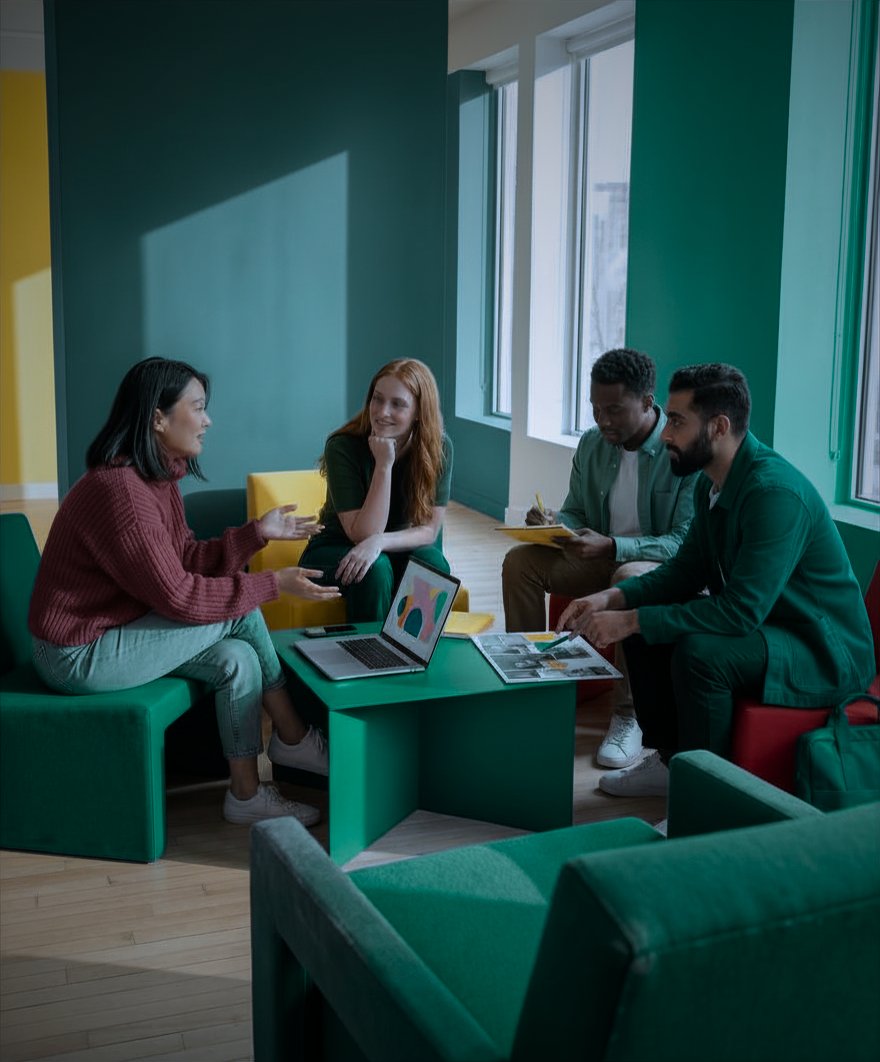
Discussion in a meeting room

Many small associations and organisations have been doing central work for years without receiving corresponding public or political recognition. They organise advice, keep spaces open, represent perspectives that rarely appear elsewhere — and yet remain in the background. The question is not whether this work is relevant, but why it so rarely becomes visible.

Structural Barriers

Limited resources, missing communication structures and institutional barriers make it difficult to place concerns sustainably. Where staff positions are lacking, communication is often handled by volunteers alongside other work — without a strategic framework, without a continuous editorial line, without access to the reach that larger organisations take for granted.

A Heightened Environment

In an increasingly tense political climate, visibility becomes a precondition for participation — and simultaneously harder to achieve. Those who want to participate in debates must appear in them. Those who want to appear in them need structures, language and platforms. These three things are precisely what many organisations lack, organisations whose contribution to democracy is particularly needed today.

"Visibility is not a property. It is the result of a practice — and this practice can be built."

Communication as a Strategic Field

Communication is not an add-on to political and civil society work — it is its integral component. Those who communicate position themselves. Those who position themselves shape. This shifts the question from "When do we find time for it?" to "How do we anchor it at the core of our work?"

Visibility is not a property — it is the result of a practice.
Communication · Civil Society · Public Sphere
Share LinkedIn Get in touch

Did this impulse spark something?

Questions, responses, ideas for collaboration — get in touch.

Get in touch →